Custom kitchens and bathrooms for over 50 years

Dekton countertops Rochon – cuisines et salles de bain 16 January, 2026

Dekton countertops

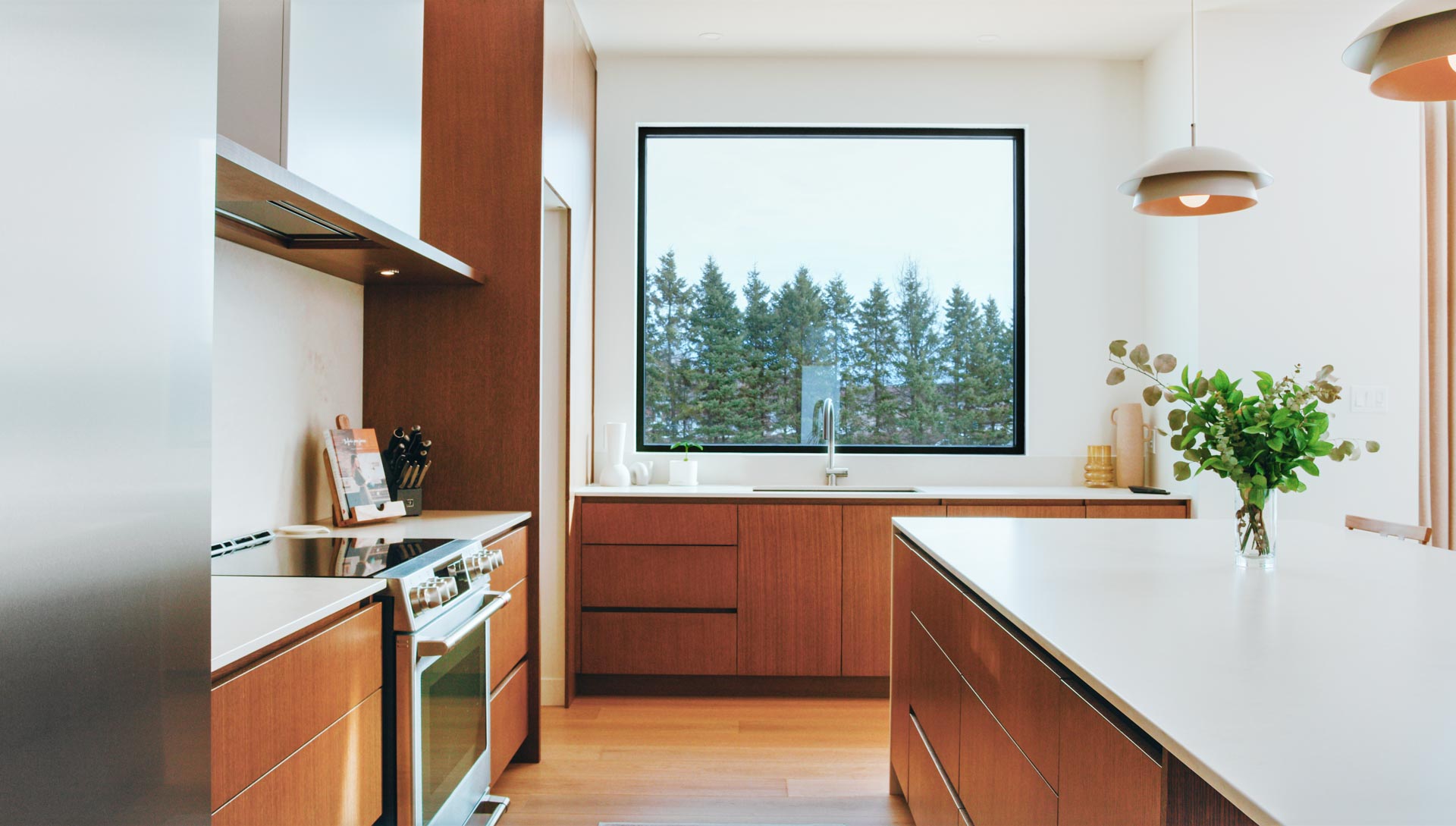
Our kitchen specialists and designers support you from slab selection through to final installation. With Dekton, you’re choosing an ultra-compact, high‑performance surface fabricated by certified shops and installed with rigorous quality control. The result: a streamlined, sturdy worktop designed for our climate, suited to indoor kitchens as well as an outdoor cooking nook.

Support from
a kitchen designer

Directly from
the manufacturer

Selection of
top brands

Turnkey
installation

Support from
a kitchen designer

Directly from
the manufacturer

Selection of
top brands

Turnkey
installation

At a glance

Dekton is a resin‑free, sintered mineral surface compressed and fired at very high temperatures. Non‑porous and dimensionally stable, it stands out for its resistance to heat, UV, and staining. Care is simple: warm water, mild soap, and a microfibre cloth. If your project calls for a uniform slab over long spans, it’s a strong candidate.

Why choose Dekton?

Dekton countertops combine density, colour consistency, and versatile use. The mineral composition yields a surface that handles daily wear without sealers or recurring treatments. For hard‑working kitchens, full‑height backsplashes, or patios, it offers visual and technical consistency you can count on.

Indoor air quality

Dekton integrates well into projects mindful of VOCs: coordinate low‑emission adhesives and sealants, and ventilate 24 to 48 hours after installation for optimal comfort.

Colours, finishes and design details for Dekton countertops

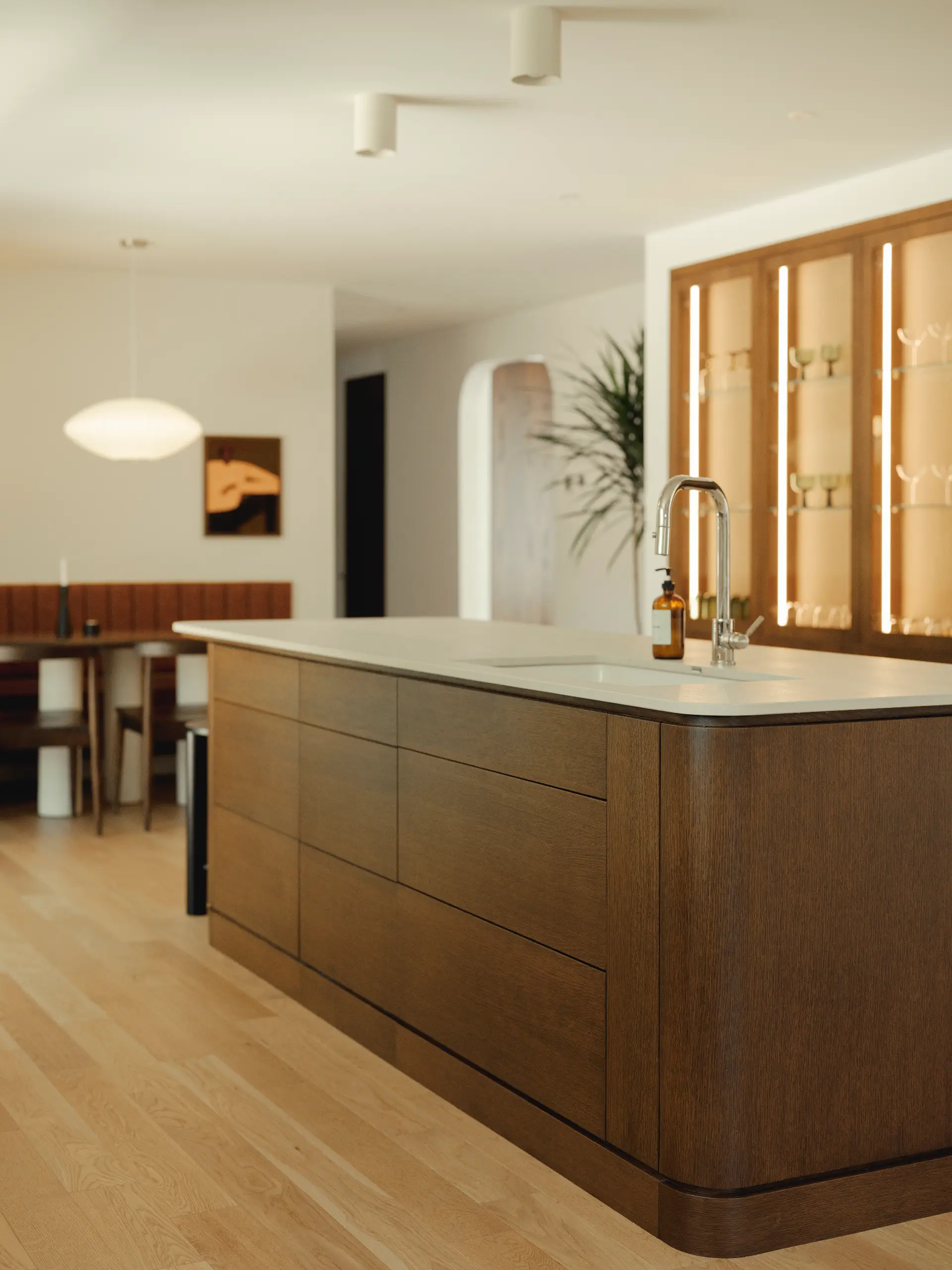
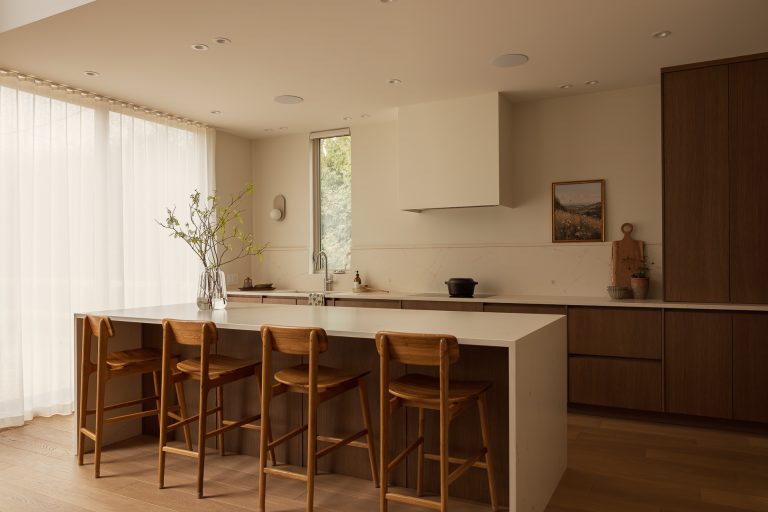
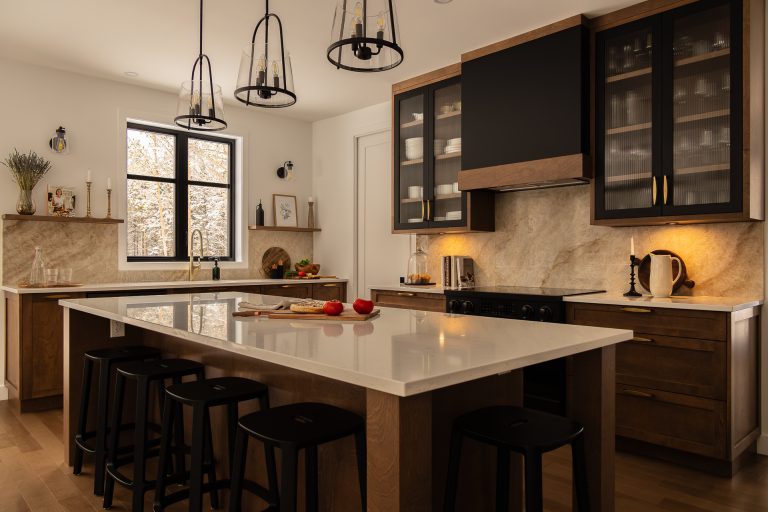
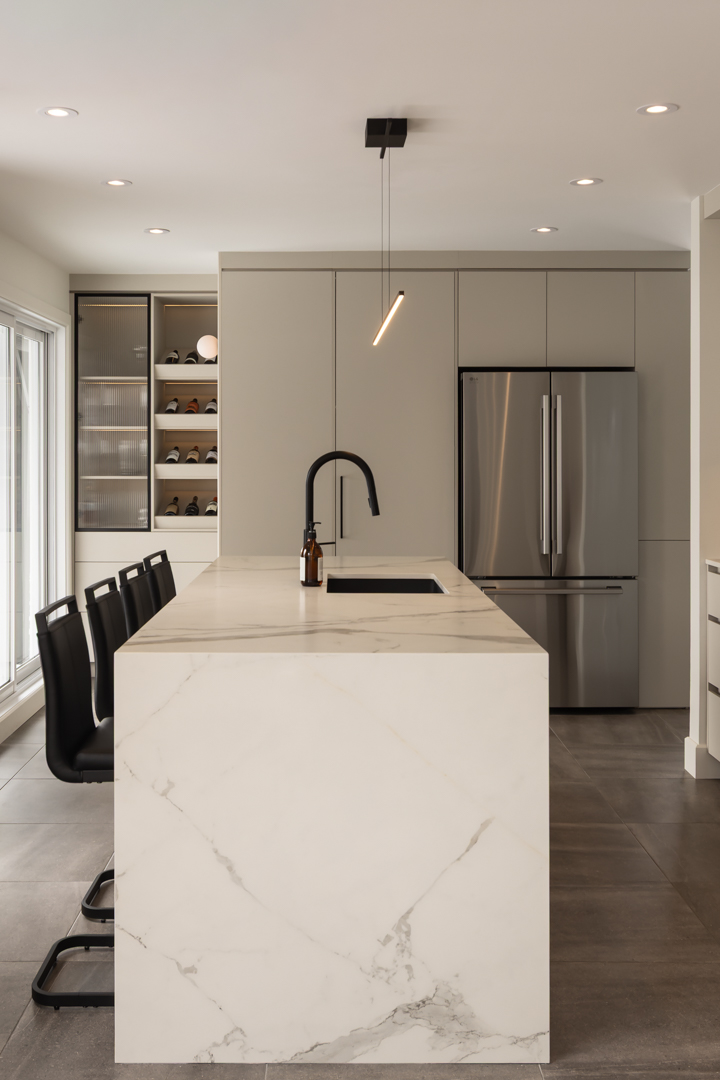
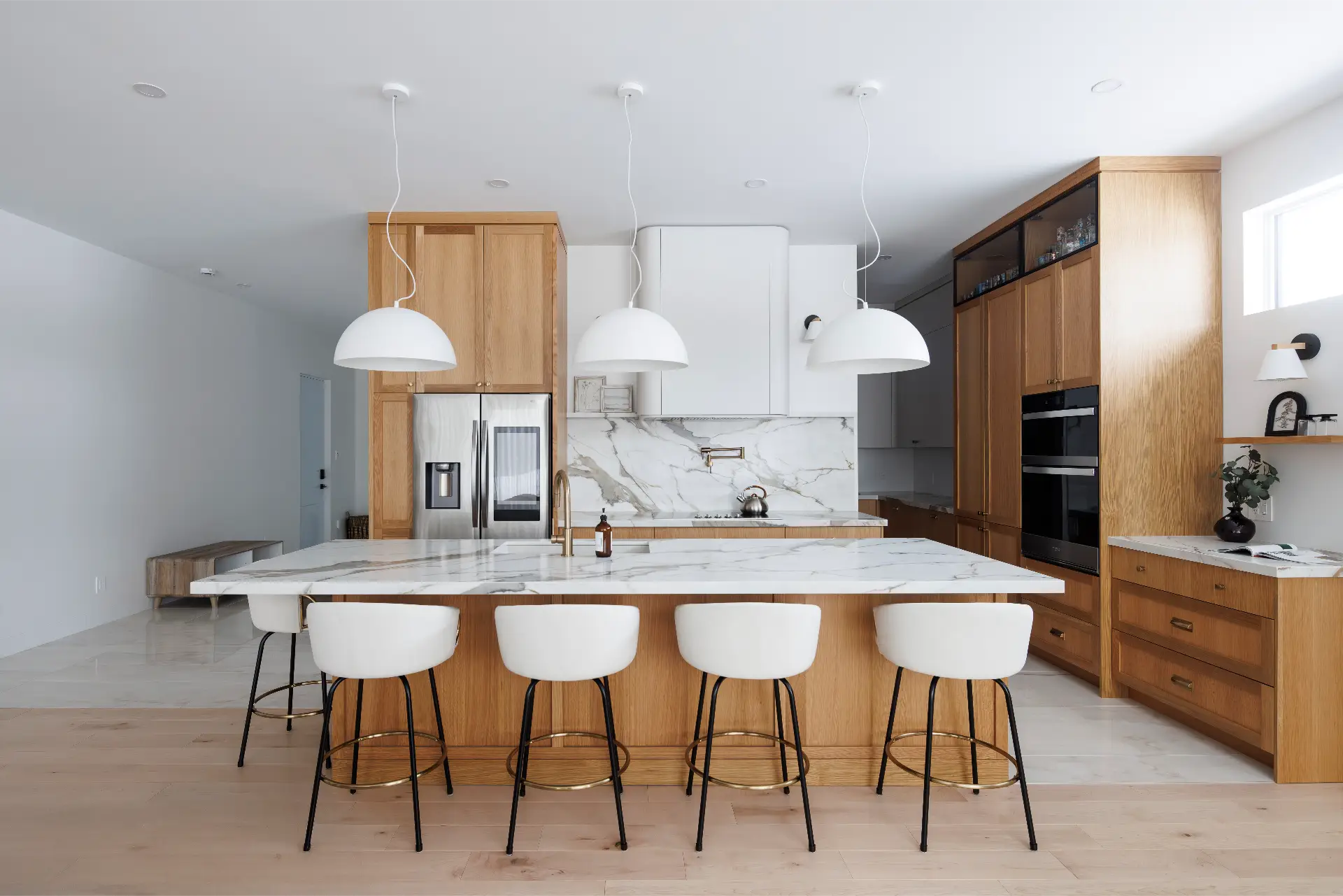
Collections span fine Calcutta‑style veining, deep solids, and stone‑like textures. Polish or matte/velvet finishes create distinct moods: one emphasizes shine and depth; the other offers a soft touch and contemporary look. Bookmatch options let you align veining across waterfalls and backsplashes for striking results. Typical thicknesses: 1.2 cm to 2 cm for a clean, minimal look; 3 cm for more presence. Available edge profiles: polished square, bevelled, half‑round, ogee—choose based on use and style.

Long spans & seams

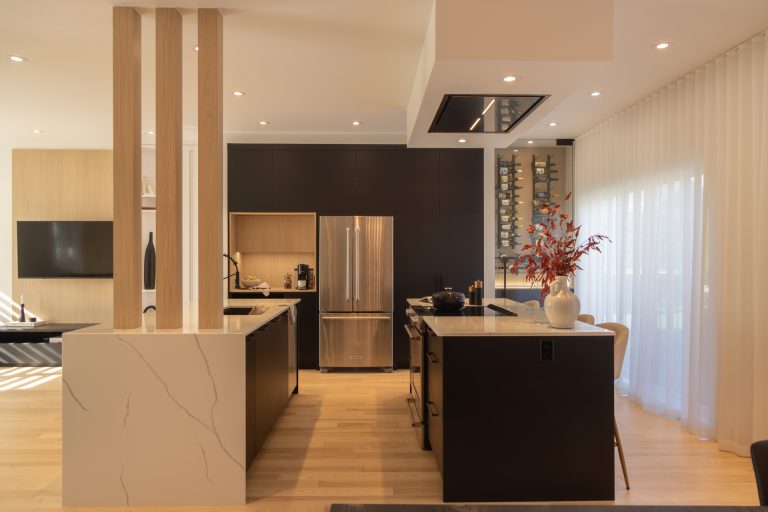
Large formats reduce visible joints and simplify pattern alignment. On signature projects (XXL islands, wall panels), plan the cuts to prioritize vein continuity.

Dekton: the drawbacks

Before making your final choice, keep in mind that Dekton countertops come with a few drawbacks, such as limited repairability, sensitivity to localized thermal shock, and some matte finishes that can show marks. Here are our designers’ recommendations.

  • Impacts on corners: Dekton is very hard. A sharp blow can chip an edge. Choose rounded profiles and protect corners during construction.
  • Limited repairability: minor chips can sometimes be touched up by a pro, but a larger chip or a crack usually remains visible. Prevention is best.
  • Precision cuts: diamond tooling and tight tolerances. Minimal on‑site adjustments. Entrust fabrication to a certified shop.
  • Localized thermal shock: strong heat resistance, but a very hot source left in place for a long time can leave a mark. Use trivets.
  • High weight: demanding handling and installation. Plan cabinet reinforcement and clear delivery access.
  • Seams on long runs: even in XL format, some projects require joints. Plan the layout and pattern alignment (bookmatch).
  • Matte finishes: sometimes more prone to oil marks/fingerprints. Adopt a simple care routine and choose the shade accordingly.

What ROCHON does for you

How do you clean a Dekton countertop?

For daily care, clean your Dekton countertops with warm water, a mild soap, and a microfibre cloth. For stubborn marks, let a gentle non‑abrasive cleaner sit briefly, then rinse and dry thoroughly. For heat, even though Dekton tolerates high temperatures, use trivets for prolonged contact and avoid localized thermal shock to preserve the surface’s appearance.

Let's discuss your next project

Planning a kitchen renovation or looking to replace your kitchen countertops? Our experts are here to guide you and help you make the right choices.

Answers to the most frequent questions about Dekton countertops

What is the average price of a Dekton countertop in Quebec?

Considered an upscale material, Dekton countertops average about $95 to $115 per square foot, installed. For a 40‑square‑foot surface, the total generally falls between $3,000 and $5,000, depending on the model, thickness, and project complexity.

Dekton is composed of a blend of minerals (oxides, natural quartz, glass, and ceramics) sintered under very high heat and pressure, with no resin.

Yes. Dekton performs very well for kitchen countertops thanks to its low porosity, resistance to stains, and stability with heat and UV.

Yes. Dekton can be used in the bathroom (vanities, walls, shelves) because it is non‑porous and easy to maintain.

No. Dekton cannot be curved: it is a rigid slab that is worked by cutting and assembly (mitres) to create shapes.

Minor chips can sometimes be repaired by a professional, but a crack or structural damage is generally still visible.

Dekton does not chip easily on the surface, but corners/edges can chip if subjected to a sharp impact.

Dekton is difficult to stain because it is non‑porous; wipe up coffee, wine, or oils promptly to avoid halos or staining.

No. Dekton is not “quartz” in the sense of a quartz countertop (resin + aggregates); it is a resin‑free, ultracompact sintered surface.

Dekton has very good heat resistance, but use trivets for extended placements to avoid localized thermal shock.

Dekton is generally mid to high‑end, with pricing that varies by collection, thickness, and complexity of the cuts.

Dekton can be comparable to or more expensive than many standard granites, and often lower than very exotic granites; it depends on the series and the market.

Dekton is sometimes pricier than mid‑range quartz, but can be comparable to high‑end quartz, depending on colour and texture.

No. Dekton is not a natural stone; it is an engineered material (sintered stone) made from minerals.

Dekton is not traditional porcelain, but it belongs to the family of ultracompact surfaces with similar or superior performance.

No. Dekton is not “quartz” (resin + fillers); it is a resin‑free sintered surface, even though its formulation includes minerals such as natural quartz.

Yes. Dekton is indeed a sintered stone (an ultracompact surface produced by sintering).

Dekton is manufactured by Cosentino (Spain), the company behind the Dekton and Silestone collections.

DISCOVER OUR
Tips and Tricks